In October 2026 the BBC published a short video report examining AI-generated images circulating in connection with protests and civil unrest in France, among them several images depicting people dressed as familiar fictional characters, such as the Pink Panther, participating in demonstrations or being apprehended by police. Not all the images were wholly AI-generated, potentially making their alterations harder to recognise at first glance. One particular image was created by modifying an earlier photograph of a man being dragged away by the authorities, identified in the report as having been taken in 2025 after a football match. Here AI had been used selectively, replacing only the man with a costumed figure.
Some of these images had been published as AI art before the unrest of 17 October. The creator of the original Instagram images, AliFramez, described the images as an art project, explaining that he had not intended for them to go viral in connection with the demonstrations, and the original Instagram post was labelled as AI content. However, once they were removed from this context, the images began circulating alongside accounts of actual protests, occasionally being interpreted as documentary photographs. Through their subsequent circulation, the images acquired a different history, shaped by the circumstances in which they are encountered.
In the days prior to seeing this BBC report, I had been considering the possibilities of cross-medium photographic reproduction. A digital photograph I had taken looked as though it would translate well into a traditional photographic negative, the tonal range and slight blur might have taken on a more deliberate appearance with the grain of photographic film. Without access to an expensive film recorder, one possibility for achieving this transcription was to display the image on a high-quality digital screen and to photograph it using a medium-format camera, effectively producing a new photographic negative from an image that had already been captured and processed digitally.
It was while considering these possibilities that another detail from the BBC report began to take on significance. Google’s SynthID watermark had been mentioned as a means of identifying imagery generated or modified using its AI systems, and with a dedicated detection service having recently become publicly available, there was an opportunity to test this technology against some of my recent photographic interests. What if an AI-generated image were photographed directly from a screen - would the resulting photograph contain enough information for the watermark to be detected? The images from the French protests suggested other possibilities - what if someone generated an image of a riot while it was still taking place, photographed the generated scene from a screen and distributed the resulting photograph online as an authentic record of the event? It seemed likely that somewhere along these transformations the watermark might become undetectable, although whether this would happen during the photographic exposure or through subsequent reproduction wasn’t immediately apparent; it was this possible point of failure that became particularly interesting. Before attempting any photographic reproduction, however, the first step was to generate an image and establish how the detector would respond to it.
The first image was generated using Google’s Gemini, depicting a fairly ordinary European street scene with pedestrians, shops, bicycles and a tram. The prompt had asked for something resembling an unremarkable documentary photograph, with natural lighting, a slightly imperfect composition and without the more dramatic qualities often associated with AI-generated imagery. At a passing glance the resulting image might resemble a photograph, although there’s something unusually staged about it, the exposure is almost too even, and the surfaces have a smooth quality, missing many of the incidental details such as dirt or rubbish that might otherwise be present. I suspect most people accustomed to looking at AI imagery would recognise it fairly quickly.
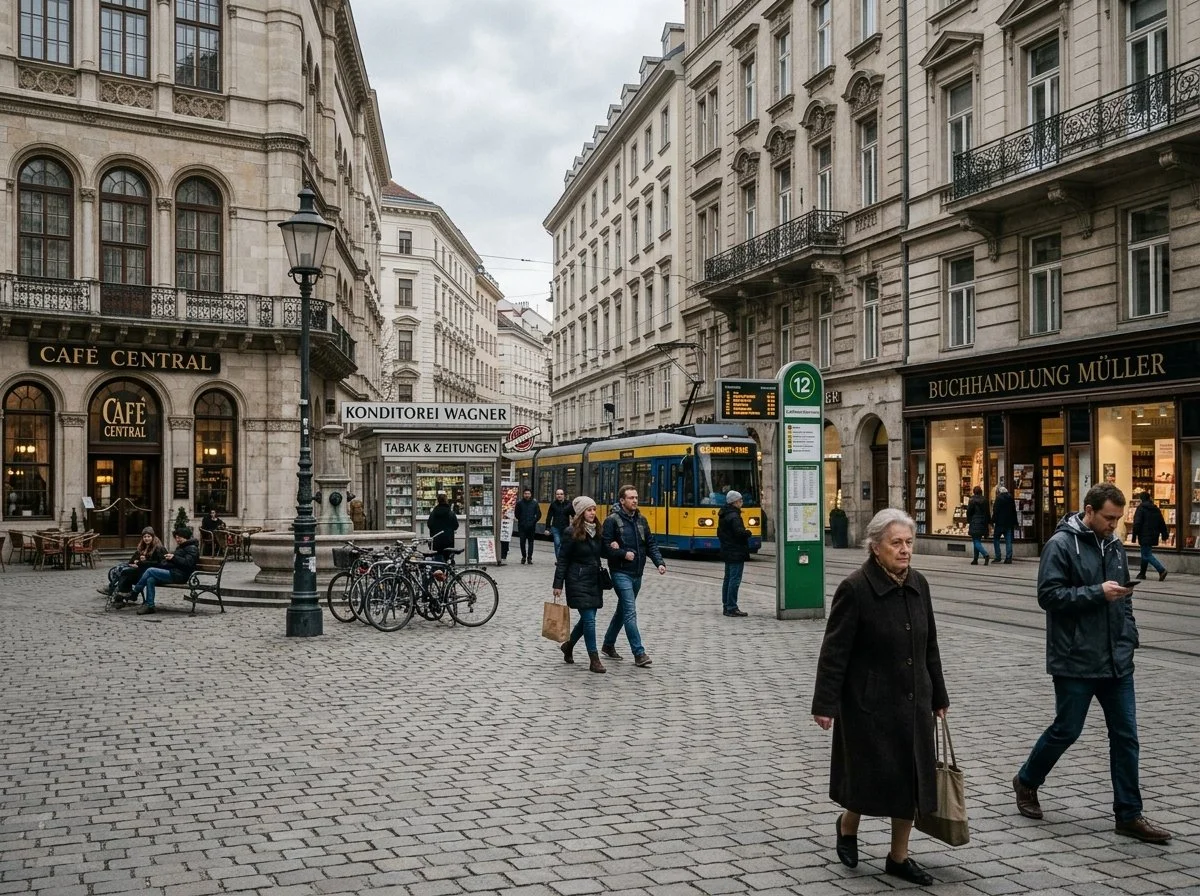
Figure 01. Gemini generated European street scene, October 2026. Original digital image used throughout the experiments.
Whether the scene convinced a viewer wasn’t particularly important for this experiment, as the question was whether a computer could continue to recognise its origins after it had undergone various forms of reproduction. The images circulating during the French protests had raised questions about how context could lend credibility to an artificial image, particularly when an existing photograph was modified, but here the interest was in whether the information identifying its generative origin could survive changes to the image itself.
The original Gemini image returned a positive result when submitted to Google’s SynthID detector. The first tests involved removing the information accompanying the file, first its embedded provenance record and then the remaining removable metadata, but neither change prevented detection. The pixels themselves hadn’t changed, so the next test involved altering the image. It was enlarged to 150% in Photoshop, placed on an A4 page, exported as a PDF and then reopened as an image with the surrounding page cropped away. This produced a new version of the street scene through enlargement and resampling, yet SynthID continued to be detected, even after the resulting file’s metadata was removed. The question then became what the detector was recognising: was it information within individual pixels or a larger pattern spread across the image?
The next step was to degrade the image’s pixel information through a process of physical transcription, starting by printing the digital file using a colour laser photocopier and then scanning the result back into a digital file. The generated street was printed at 100% size, occupying only a portion of the A4 sheet, which was then scanned in its entirety, including the blank paper surrounding the image.
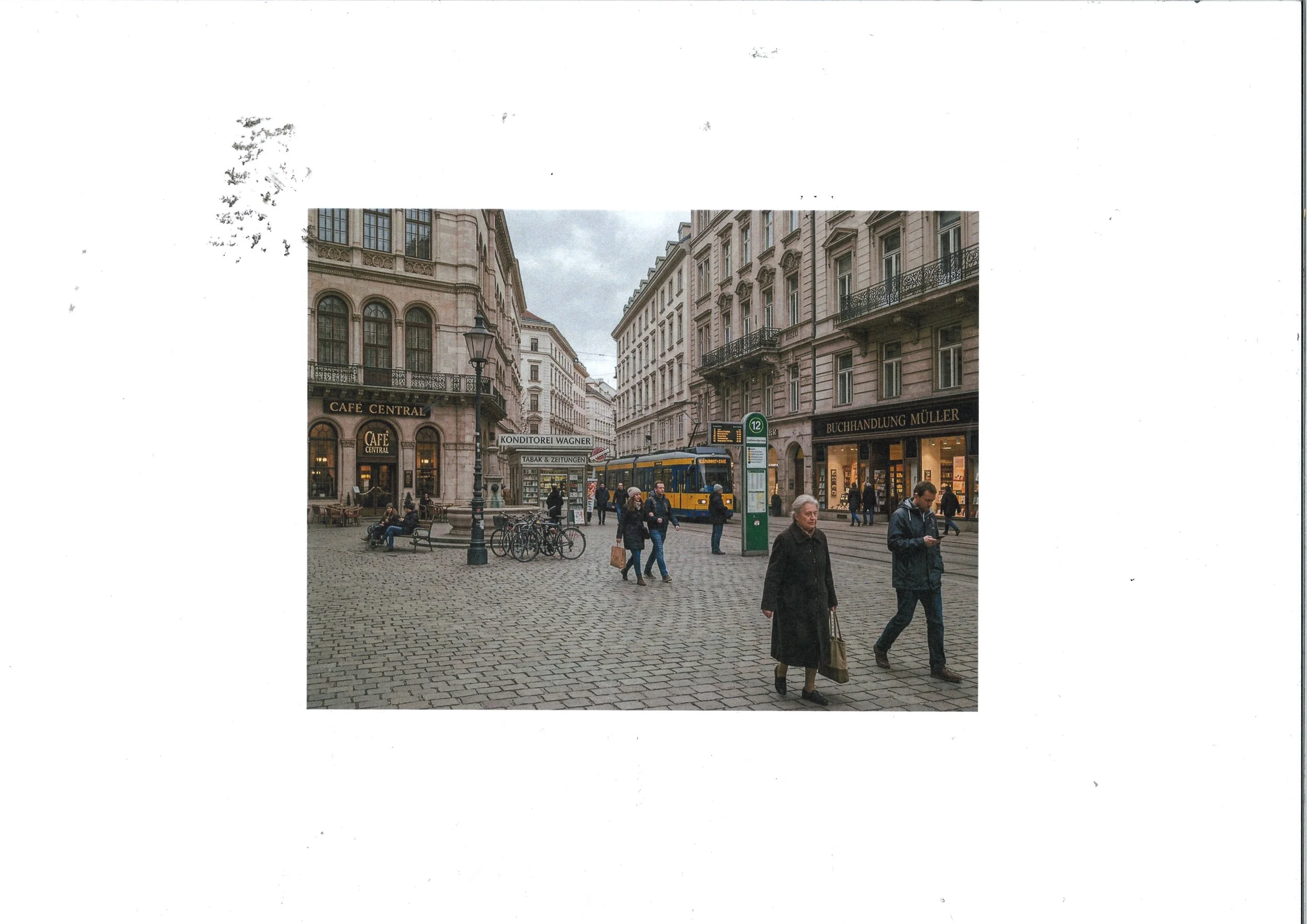
Figure 02. Gemini image reproduced on A4 office paper using a colour laser printer and subsequently scanned at 600 dpi.
At a normal viewing size the street remained much as it had before, though on closer inspection the printing process had introduced noticeable changes, fine details had softened, particularly around the architecture, and the image now contained the texture of the toner and paper from which it had been scanned. Although the scene itself was recognisable, the resulting digital image was no longer composed of the same pixel information as the original, and whatever metadata had accompanied the original file certainly hadn’t passed through the physical print.
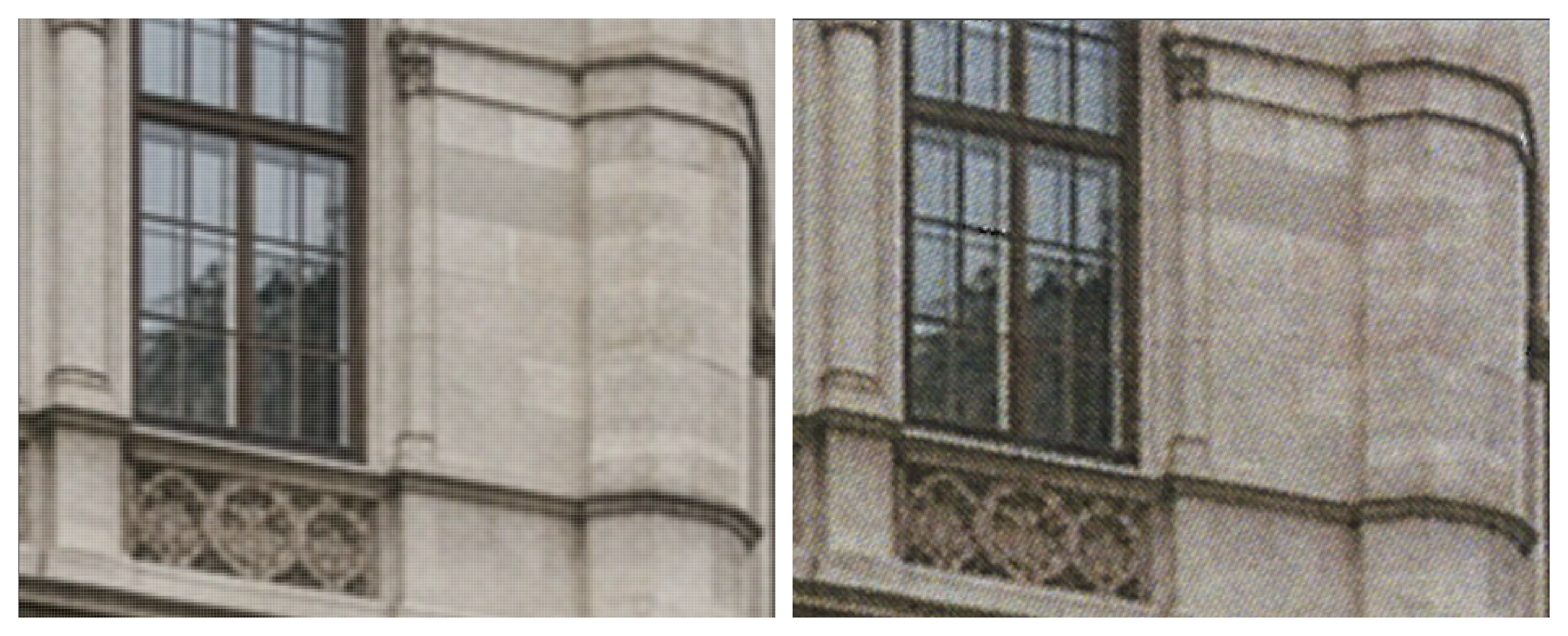
Figure 03. Enlarged details from the original digital image (left) and its printed-and-scanned reproduction (right), showing changes in fine detail and surface texture.
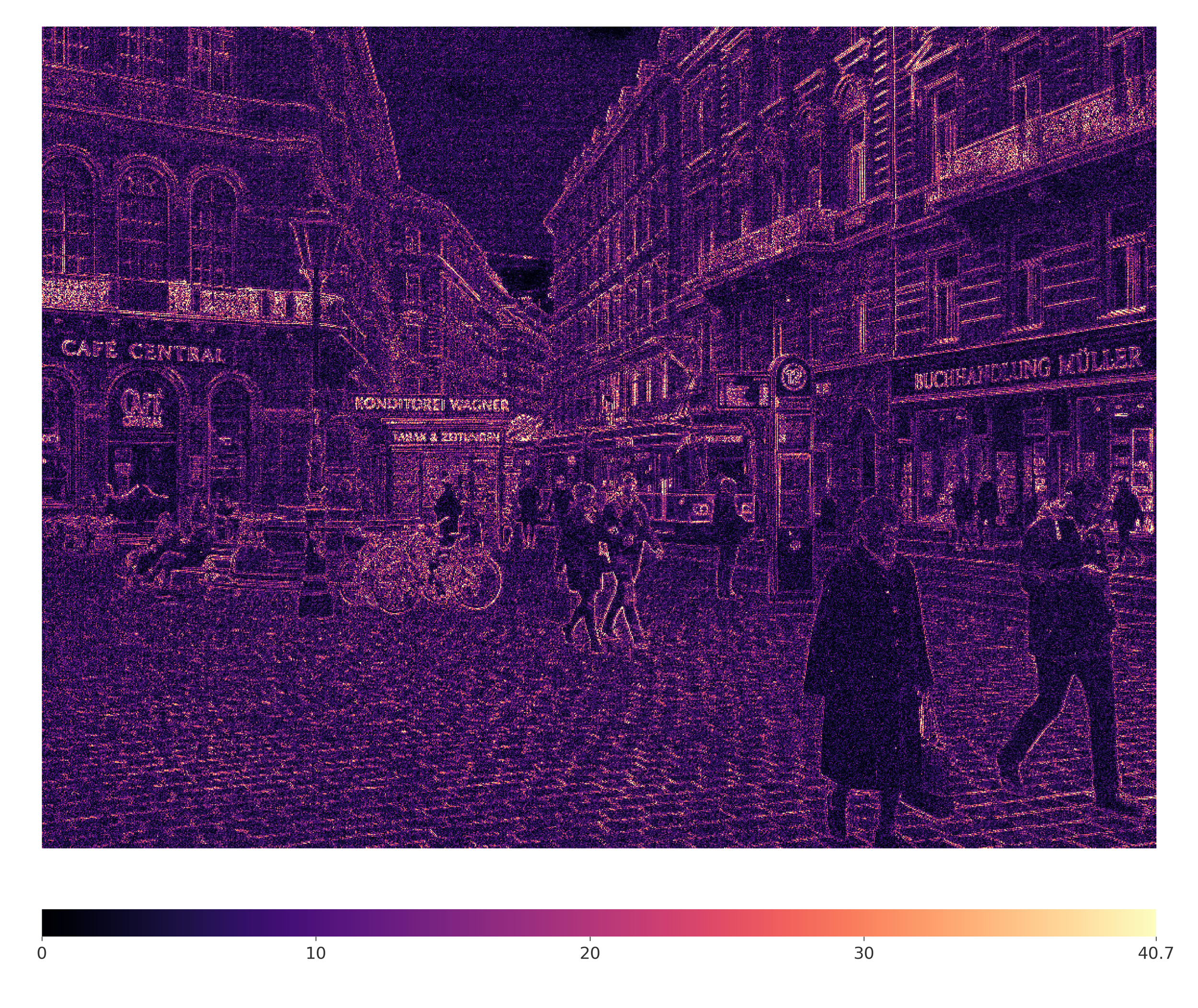
Figure 04. False-colour map showing differences between the original Gemini image and its printed-and-scanned reproduction. Brighter areas indicate greater differences in fine detail. The map does not show the SynthID watermark.
The complete A4 scan was submitted to SynthID, with the photograph surrounded by the blank paper, and the detector returned another positive result. Removing most of the surrounding paper and testing the photograph on its own made no difference, SynthID was detected again. Although this wasn’t the photographic transformation originally imagined, the image had passed from a digital file into a physical object and back again, acquiring new characteristics along the way, yet something of the information that allowed SynthID to recognise its generative origin appeared to have remained. Given how much of the original pixel information had been altered through printing and scanning, it seemed increasingly unlikely that detection depended on particular pixel values remaining intact. There is perhaps a comparison to be made with the tracking dots used by some colour printers, where identifying information is distributed across a printed image. Could SynthID operate through similarly distributed information? If so, how much of the original image actually needed to remain, could a smaller portion contain enough information to produce the same result?
To investigate this I began cropping the original Gemini image, reducing its visible area in stages while keeping the centre of the street intact. Each new version contained a smaller portion of the same scene, without shrinking or enlarging what remained. Even after three quarters of the original image’s area had been removed, SynthID was detected, though when only a small section remained the result changed. By working back through smaller increments, I found two crops with different responses, one retaining approximately 19% of the original image area was detected, while another retaining 14% wasn’t. The difference between them amounted to a narrow strip around the perimeter of the scene, yet it was enough to change the result returned by the detector.
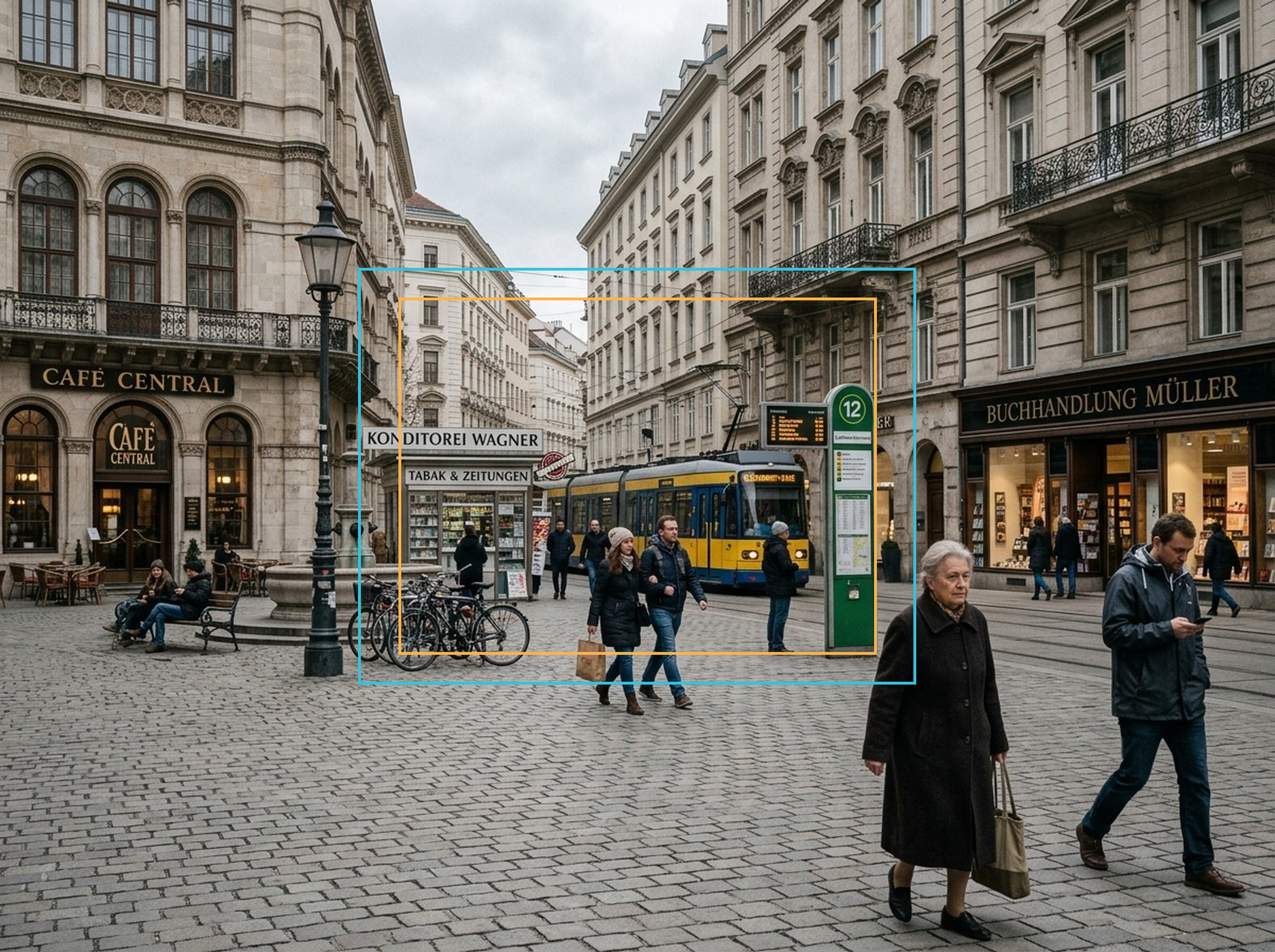
Figure 05. Central crops retaining 19.14% (blue) and 14.06% (orange) of the original image area. SynthID was detected in the larger crop, but not the smaller one.
Cropping, however, didn’t simply remove parts of the scene, it also reduced the number of pixels in the file, and I wondered whether this might account for the change rather than the loss of some wider arrangement of information. To investigate this, the smaller crop that had failed detection was enlarged to twice its width and height, without restoring any of the missing scene, but the result remained negative. The larger crop was then reduced to the same pixel dimensions as the unsuccessful one, and SynthID continued to be detected. Both images now measured 450 by 336 pixels, though one contained a larger portion of the original street scene. There were differences in how the two images had been processed, so the comparison wasn’t entirely conclusive, though it did suggest the number of pixels alone couldn’t account for what was happening.
The printed image offered another opportunity to examine this. Its scanned reproduction contained considerably more pixels than the original Gemini image, having been scanned at a much higher resolution, although the printing process had altered much of its finer detail. Cropping the scan to retain approximately the same central portions of the scene, I found that SynthID was detected when 19% of the image area remained, but not at 14%, matching the results from the original. The comparison was repeated after reducing the scanned image to approximately the same dimensions as the original Gemini file, with the same outcomes. Whatever information was being recognised, it appeared capable of surviving the physical reproduction process, while the proportion of the image retained seemed to influence whether it could be detected.
These results came from a single generated image, with each crop taken from its centre, so there was no reason to assume the same proportions would apply to other images or different areas of the same photograph. There was also the question of what a negative result actually meant. Google’s detector reported that SynthID was not detected but this didn’t necessarily mean the watermark itself had been removed, only that the detector could no longer identify it under those particular conditions. The cropped image had originated in Gemini just as the full-size image had, yet the evidence by which that origin could be recognised appeared to have changed.
The hypothetical photograph of a riot posed another question about the photograph itself. If an AI-generated image were displayed on a screen and photographed with a camera, the resulting photograph would be the product of a genuine photographic exposure, although what the camera captured would be an image on a screen rather than the event it appeared to depict. A print made from that photograph could carry its own material characteristics, the variations and incidental imperfections introduced through printing and subsequent reproduction, yet none of these characteristics would necessarily tell us anything about the circumstances in which the original scene had been created.
The experiments had also complicated my initial assumption that transferring an image through a physical medium might be enough to prevent its origins from being recognised. SynthID had survived the laser printing and scanning process, while cropping the image had eventually produced a negative detection result without requiring any further physical transformation. Neither result established what might happen when photographing a digital screen, though it did make me reconsider where the limits of detection might lie, and whether transformations that appear substantial to us necessarily have the same consequences for the information embedded within an image.
The physical reproduction tests had so far relied on a flatbed scanner to turn the printed image back into a digital file; a camera would introduce another set of changes. The next experiment will therefore be to photograph the same printed sheet using a digital camera, capturing the image through a lens and sensor rather than a scanner, before submitting the resulting photograph to SynthID. Using traditional film to photograph the image directly from a screen could follow. Each process would introduce its own changes, some perhaps more consequential than others, although without further testing it was difficult to know which.
The images circulating in connection with the French protests now seemed to raise a question beyond whether a particular watermark could be detected. An image could acquire a genuine history of photographic exposures, prints and scans, while the circumstances represented within it remained entirely fictional. And with each reproduction producing another object, with its own material history, I began to wonder how much of an image’s earlier existence could be established from its latest form, and how much might depend on the account accompanying it.
